RICHMOND & METRO VANCOUVER
Concrete Crack Injection & Leak Sealing
Water coming through a concrete crack? Can Concrete provides crack injection and leak-sealing work for foundations, parkades, concrete walls and other suitable concrete conditions across Richmond and Metro Vancouver.
Send photos and location details through our estimate form. We review the water condition and advise on the appropriate next step.
WHERE WATER IS GETTING THROUGH
Common Concrete Leak Problems We Review
Concrete cracks can allow water intrusion through below-grade walls, parkades and structural slabs. We review these typical water-entry conditions:
Leaking Foundation Cracks
Water penetrating through below-grade foundation wall cracks during heavy rainfall or high groundwater levels.
Parkade Wall Cracks
Active leaks through concrete perimeter and retaining walls in underground parking structures.
Underground Parking Leaks
Overhead slab and ceiling cracks allowing water to drip onto parking stalls, drive aisles and storage areas.
Concrete Wall / Ceiling Cracks
Vertical, diagonal or horizontal cracks in interior concrete walls or suspended slab ceilings with moisture intrusion.
Construction Joints
Water tracking along cold joints, pour lines and wall-to-floor junctions where concrete sections meet.
Water Staining Around Cracks
Efflorescence (mineral salts), calcification and damp staining indicating ongoing or historical water movement.
Active Seepage Through Concrete
Visible weeping, trickling or pooled water emerging through porous or fractured concrete sections.
Note on crack origin: Not every leak originates from a crack. Water can also migrate through porous concrete, pipe penetrations, expansion joints or defective exterior membranes. We review the site conditions before recommending an injection scope.
REAL WORK EXAMPLES
Concrete Crack Injection in Progress
Examples of crack injection and water-intrusion repair conditions showing the crack, injection process and active repair work.
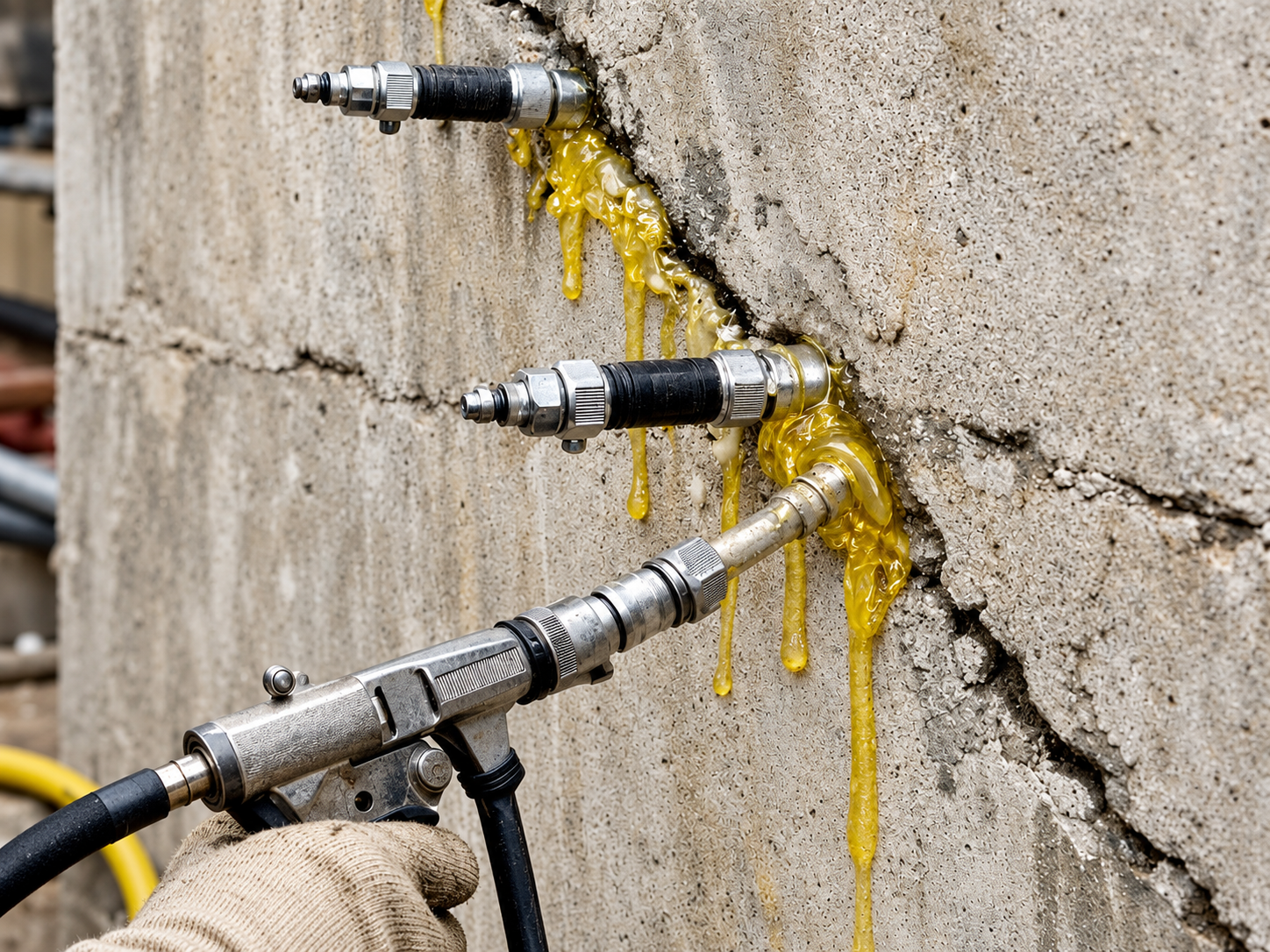
Crack Injection with Mechanical Packers
Crack Injection with Mechanical Packers
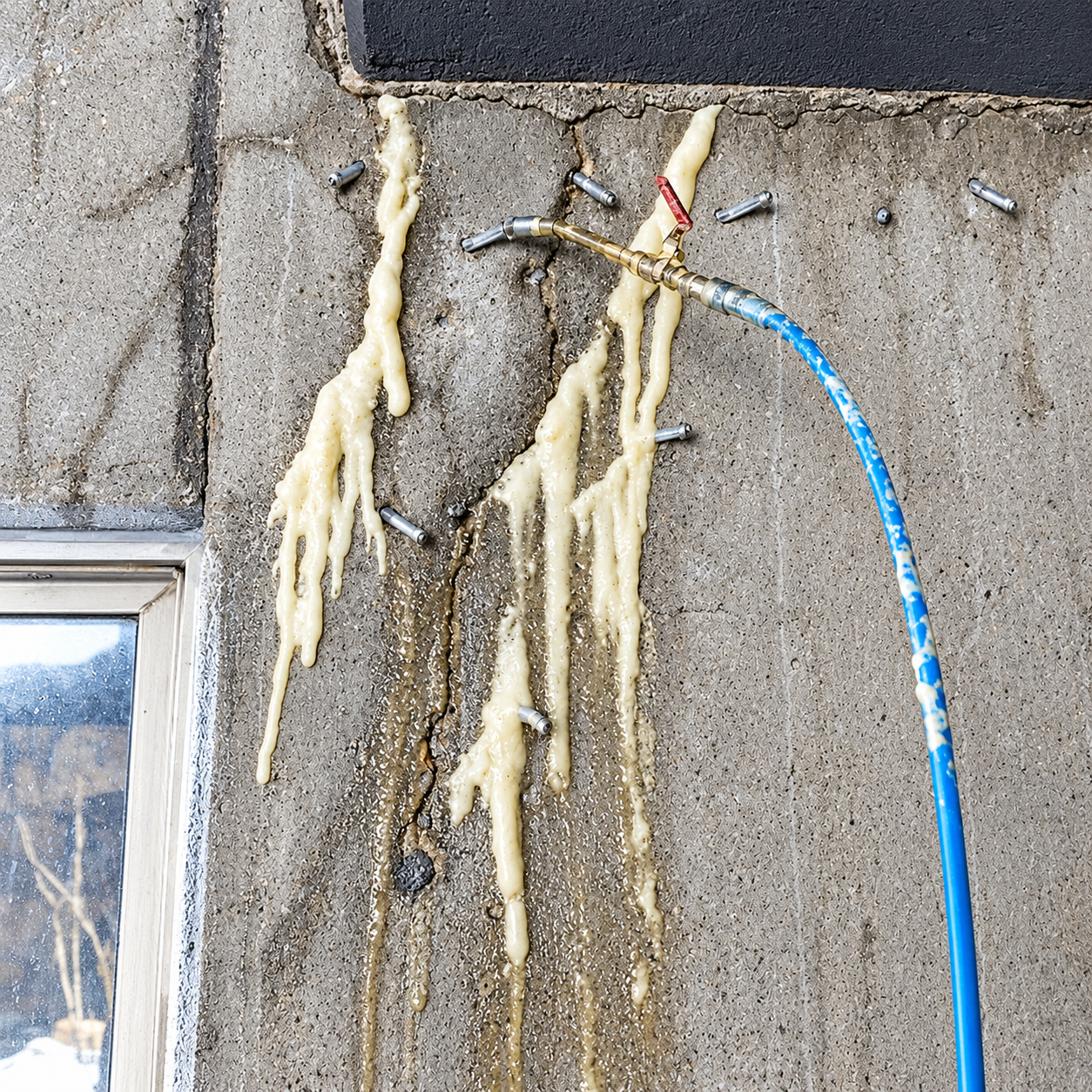
Injection Material Expanding Through the Crack
Injection Material Expanding Through the Crack
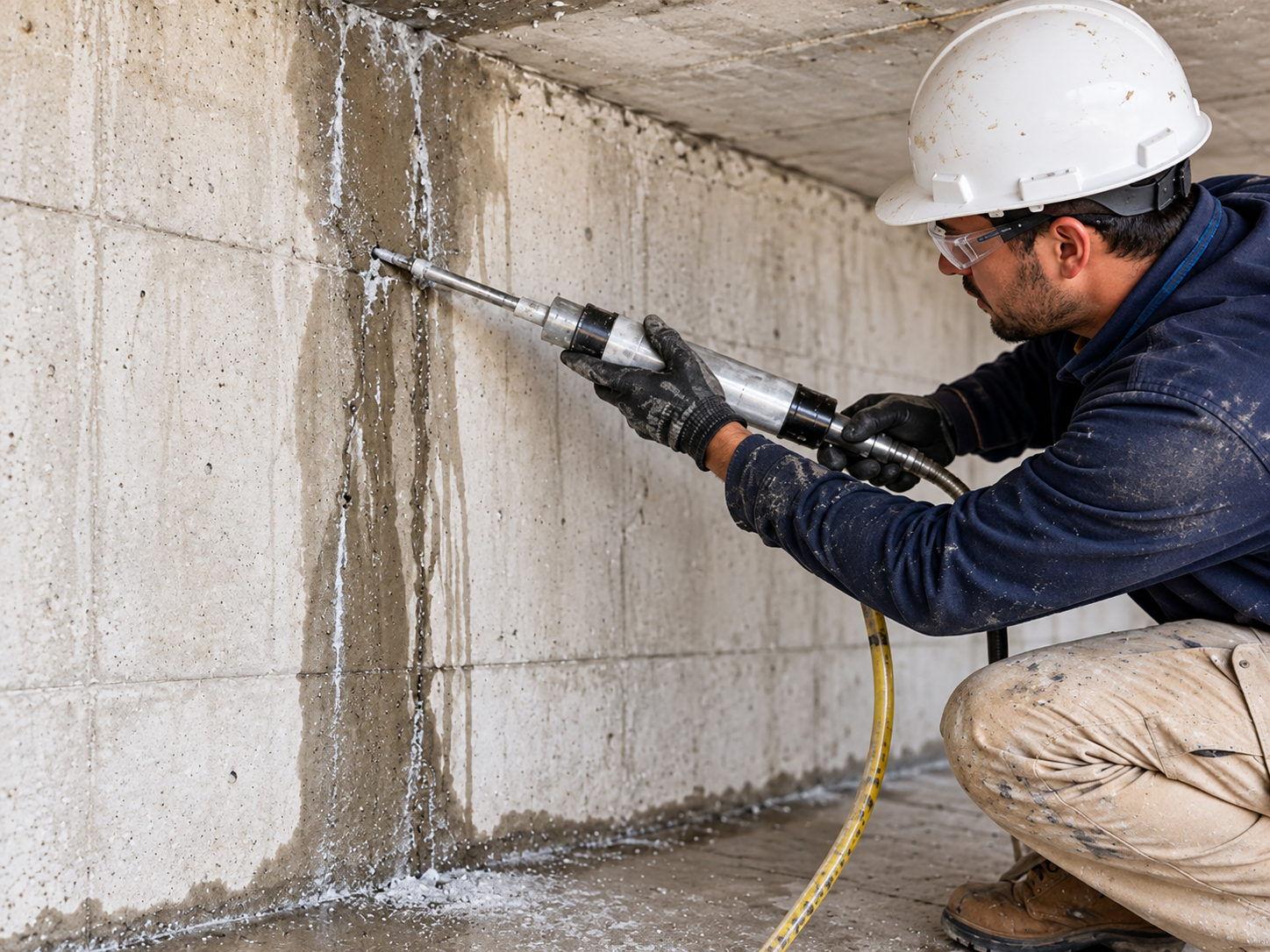
Concrete Crack Injection in Progress
Concrete Crack Injection in Progress
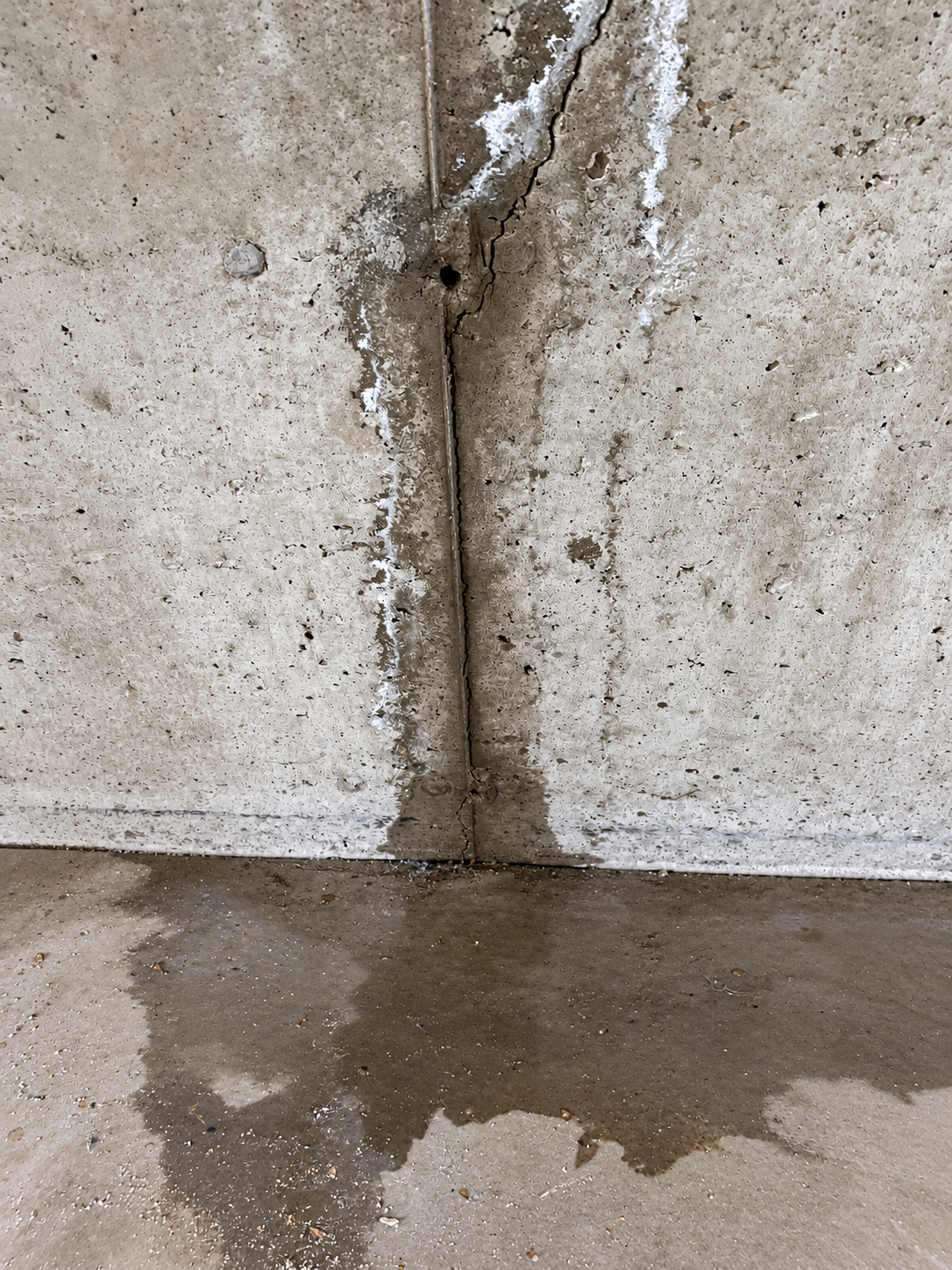
Leaking Concrete Crack Before Repair
Leaking Concrete Crack Before Repair
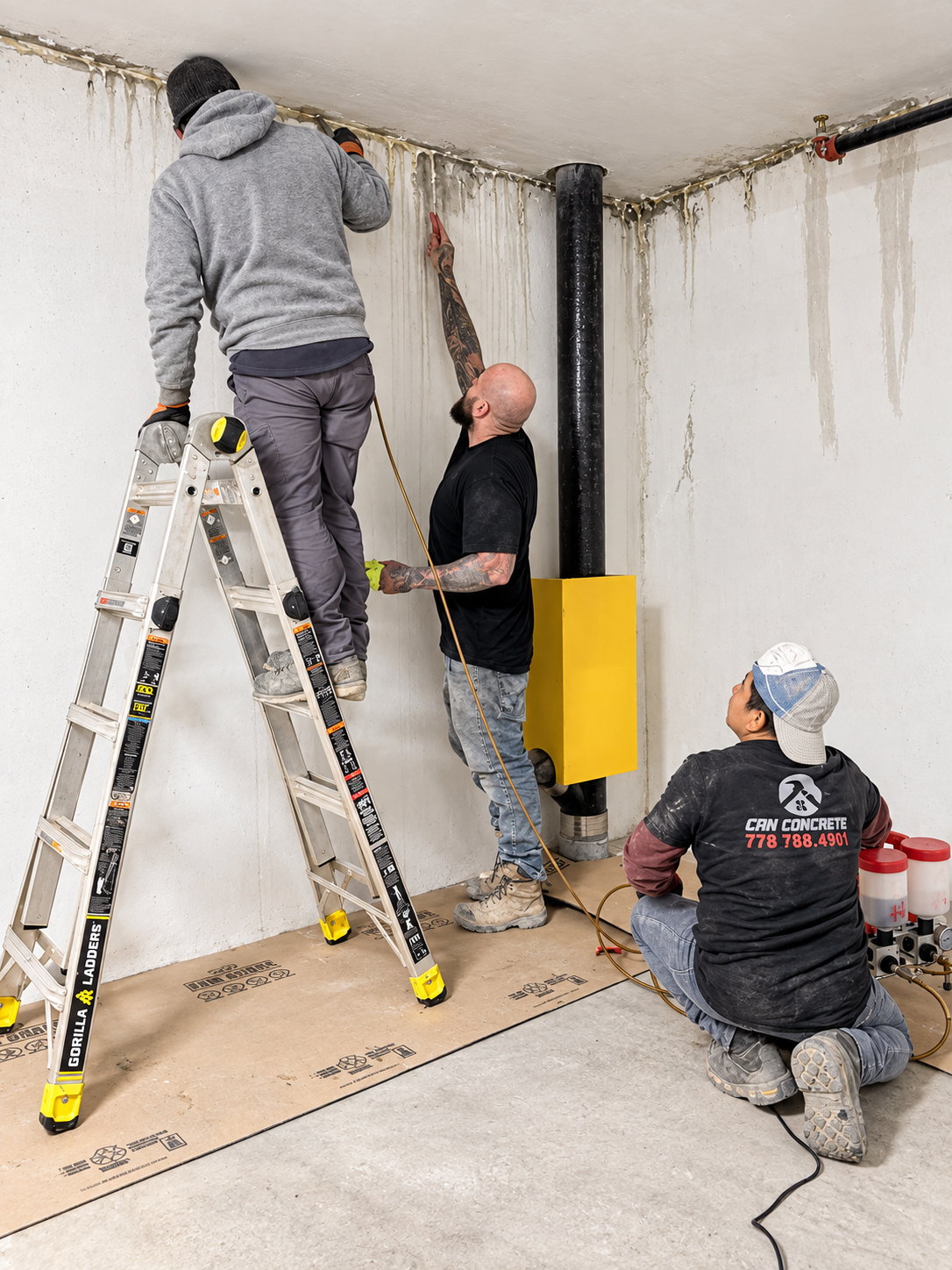
Interior Water-Intrusion Repair
Interior Water-Intrusion Repair
REPAIR PROCESS
How Leak-Sealing Injection Works
Our systematic approach ensures injection material penetrates the crack depth and stops water travel through the concrete assembly:
Review crack and leak condition
We review the crack, water-entry pattern, active moisture and access to the affected area.
Determine whether injection is suitable
We confirm whether injection is appropriate or if a different repair or waterproofing approach is required.
Prepare the crack / injection locations
The surface is cleaned, loose material removed and drill holes prepared along the crack path at calculated angles.
Install injection ports / packers
Mechanical packers or surface injection ports are anchored firmly into the concrete along the crack line.
Inject selected repair material
The selected repair resin is injected under controlled pressure using dedicated injection equipment.
Allow material to travel through the crack
The material reacts with moisture or cures to expand and fill the crack and internal void structure across the wall thickness.
Remove or finish injection points
Mechanical packers are removed or finished flush as appropriate for the concrete surface.
Review the repaired area
We inspect the treated crack, verify closure of the water pathway and clean up the work area.
ASSESSMENT
The Leak Condition Matters: Active vs Dry Cracks
A crack that is actively leaking under hydrostatic pressure requires a different material and pressure approach than a dormant, dry crack. Moisture content, crack movement, accessibility, concrete condition and the original source of water all influence whether injection is viable.
Hydrophobic and hydrophilic polyurethane injection materials react directly with water to foam and cure, forming an impermeable, resilient seal within the crack channel. Dry cracks, by contrast, may require specialized primers or alternative treatment depending on whether movement is anticipated.
We do not provide a one-size-fits-all material recommendation without reviewing the specific moisture condition and site context.
Key Factors We Check
- Is water actively weeping, trickling or dormant?
- Does leakage correspond directly to heavy rainfall events?
- Is the concrete surrounding the crack solid or spalling?
- Are there previous failed surface coatings or hydraulic cements?
- Is there clearance to install mechanical packers at 45-degree angles?
IMPORTANT DISTINCTION
Leak Sealing Is Not the Same as Structural Repair
Understanding the clear boundary between water intrusion sealing and structural restoration protects your property and prevents costly misdiagnoses:
Leak-Sealing Injection
Purpose: Reduce or stop water movement through an injectable concrete crack or joint.
Uses flexible or expanding polyurethane resins designed to fill internal voids and resist hydrostatic water pressure. This stops active water intrusion and protects the interior space from moisture damage.
Structural Concrete Repair
Purpose: Address damaged concrete, structural cracking, load-related deterioration or conditions requiring engineered repair details.
When cracks are caused by foundation settlement, structural overloading, or corroding rebar spalling the concrete, a structural repair scope with professional engineering specifications is needed.
Our commitment: Crack injection can be effective for water sealing, but it does not automatically restore structural capacity. If the crack condition suggests structural movement or damage, additional engineering review may be required.
BROADER WATER MANAGEMENT
When the Problem Is Bigger Than One Crack
If water is entering through multiple locations, masonry wall joints, suspended deck slabs, exterior surfaces or broader assemblies, the solution may involve waterproofing or exterior drainage coordination rather than crack injection alone.
Injecting one visible crack while surrounding concrete remains unsealed or under heavy external water saturation can cause water to simply relocate to the next path of least resistance. We help identify when a broader waterproofing scope is the appropriate long-term solution.
COMMERCIAL & STRATA SOLUTIONS
Leak Repairs for Strata & Commercial Properties
We work directly with property managers, strata councils and commercial building operators to address persistent concrete water intrusion:
Clear Repair Scope
The written estimate identifies the exact area, crack locations and agreed repair method before work begins.
Photo Documentation
Where appropriate, existing conditions, packer installation and completed repair work can be documented for strata council records.
Coordination Around Occupied Properties
Repair planning accounts for parking stall access, tenant notifications, clearance and active building operations.
Related Concrete Repairs
Injection can be coordinated with structural concrete repair or broader waterproofing when those services are included in the scope.
Common Strata Applications:
PRICING FACTORS
What Affects Crack Injection Pricing?
Photos of the crack, surrounding area and visible water staining help us understand the condition before the next step. Scope and pricing reflect these project-specific factors:
Crack length and orientation (vertical, horizontal, ceiling or floor-slab)
Active seepage versus dry crack condition at the time of repair
Site access, working height, parkade clearance and obstruction removal
Number of injection locations and packer spacing required for full penetration
Concrete condition, honeycombing and previous failed patching attempts
Hydrostatic water pressure and active water flow rate
Surface preparation and port removal/finishing requirements
Related waterproofing or structural repair needs identified
INITIAL ENQUIRY
Help Us Review the Leak
To provide a practical assessment and determine whether a site review is warranted, please share the following details with your estimate request:
FREQUENTLY ASKED QUESTIONS
Frequently Asked Questions
Can every concrete crack be injected?+
No. The crack condition, access, water source and movement need to be reviewed to determine whether injection is appropriate.
Can you inject a crack that is actively leaking?+
Some injection systems are intended for active water conditions, but the material and approach depend on the specific leak.
Does crack injection structurally repair the concrete?+
Not automatically. Leak-sealing injection and structural repair are different scopes. Structural concerns may require additional assessment or repair.
Do you repair parkade leaks?+
Yes. Crack injection and related concrete leak repairs can be reviewed for parkades and underground parking areas.
Can you repair ceiling cracks?+
Some overhead concrete cracks can be reviewed for injection or related repair depending on access and condition.
What if water is coming through more than one area?+
The problem may require waterproofing or broader concrete repair in addition to, or instead of, crack injection.
Do I need a site visit?+
Start with clear photos and project information. Can Concrete can determine whether additional review or a site visit is needed.
RELATED CONCRETE SCOPES
Related Concrete Services
GET STARTED
Water Coming Through Concrete?
Send us photos of the crack, surrounding concrete and visible water staining. We'll review the condition and contact you about the appropriate next step.