RICHMOND & METRO VANCOUVER
Concrete Waterproofing & Water-Intrusion Repair
Can Concrete reviews and repairs water-intrusion conditions affecting concrete walls, slabs, stairs, parkades and below-grade areas, with the repair or waterproofing scope matched to the actual condition.
Send photos and location details through our estimate form. We review the water condition and advise on the appropriate next step.
WHERE WATER IS GETTING IN
Common Water-Intrusion Conditions We Review
Water can migrate through concrete assemblies in many ways. We review these typical water-entry and moisture conditions:
Parkade Wall / Ceiling Leaks
Overhead slab dampness, perimeter wall leaks and water pooling in underground parkade bays and drive aisles.
Foundation Wall Seepage
Water migrating through below-grade perimeter concrete walls during high groundwater or persistent rain events.
Water Around Concrete Joints
Moisture tracking through cold joints, construction joints, control joints and floor-to-wall intersections.
Stair / Landing Water Intrusion
Water penetration through exterior concrete stairs, landings, podium transitions and stairwell retaining walls.
Cracked Concrete with Recurring Leakage
Areas where cracking has opened water pathways across broader concrete sections rather than a single isolated line.
Below-Grade Concrete Moisture
Persistent dampness, sweating surfaces and moisture vapour transmission through basement or retaining assemblies.
Localized Surface Waterproofing Failures
Existing coatings, sealers or membranes that have delaminated, worn through or failed to prevent water ingress.
Water Staining / Active Seepage
Efflorescence salt deposits, mineral tracking and active weeping across interior or exterior concrete surfaces.
Note on water staining: Not every visible water stain has the same cause. Water may be tracking from an overhead joint, an exterior grade transition, a pipe penetration or high groundwater. We inspect accessible concrete surfaces to identify the most likely water path before proposing work.
REAL WORK EXAMPLES
Concrete Waterproofing Project Example
Air-shaft concrete wall waterproofing completed by Can Concrete.
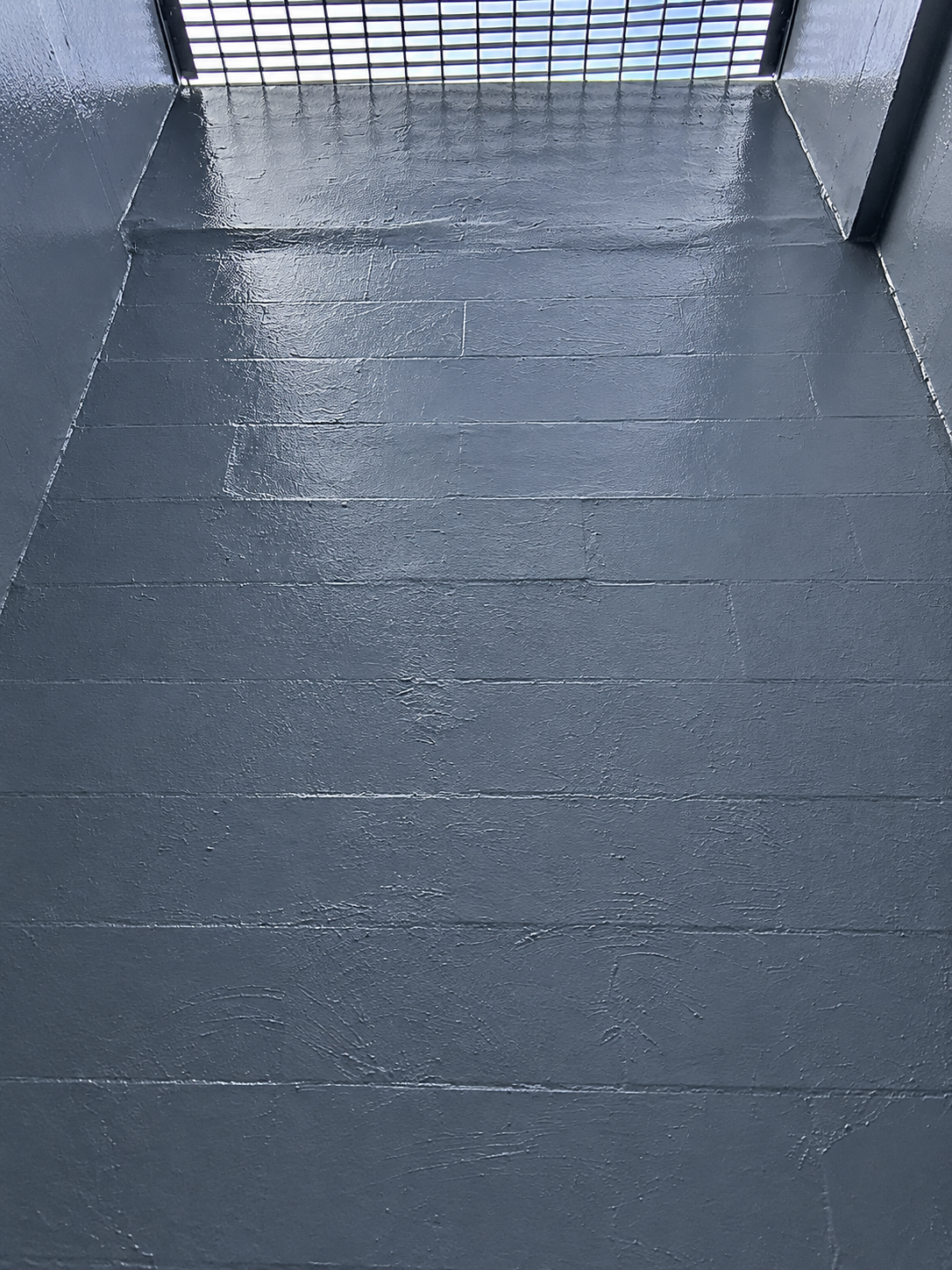
Air-Shaft Concrete Wall Waterproofing
Air-Shaft Concrete Wall Waterproofing
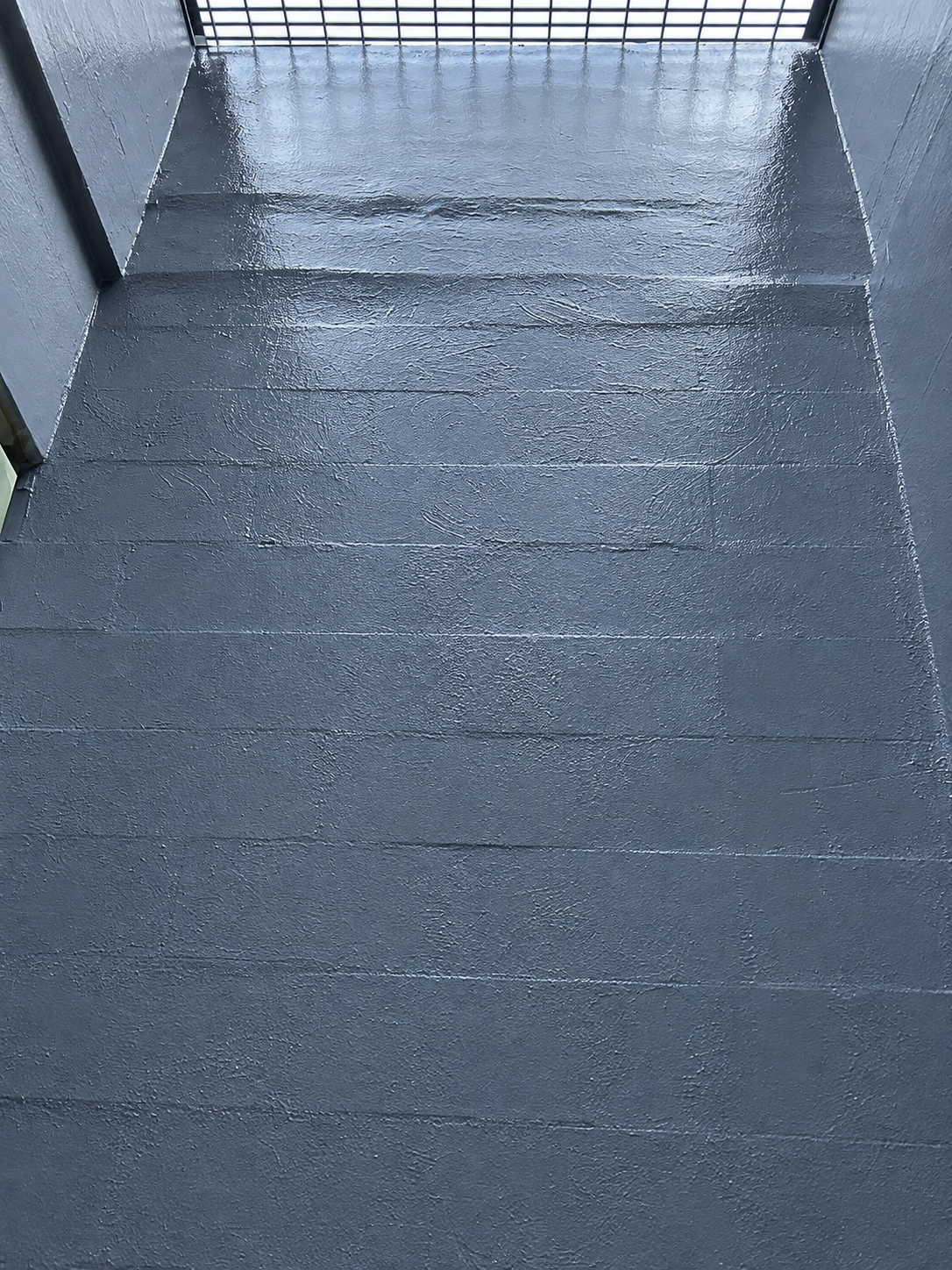
Waterproofed Air-Shaft Wall Surface
Waterproofed Air-Shaft Wall Surface
DIAGNOSTIC APPROACH
The Water Path Has to Be Understood First
Water can enter concrete assemblies through cracks, cold joints, control joints, pipe penetrations, failed surface coatings, wall-to-slab intersections, exterior grade exposure or broader below-grade groundwater pressure.
Crucially, the visible wet area on an interior wall or ceiling is not always the actual entry point. Water often travels along internal voids, reinforcement lines or cold joints before emerging where air or gravity allows.
Water Entry Pathways We Check
- Cold joints and pour-line separations
- Structural and drying shrinkage cracks
- Perimeter wall-to-floor slab junctions
- Pipe, conduit and utility sleeve penetrations
- Deteriorated surface sealers or worn membranes
- Hydrostatic groundwater pressure through porous concrete
REPAIR METHODOLOGIES
The Repair Method Depends on the Condition
We do not apply a single one-size-fits-all product to every leak. Our repair approaches are tailored to the physical assembly, water pressure and access:
Crack / Joint Sealing
Polyurethane or specialized chemical resin injection designed to seal water travel through suitable individual cracks, cold joints or penetrations.
Surface Waterproofing
Application of specialized coatings, fluid-applied membranes or breathable barrier systems across exposed vertical walls or horizontal concrete sections.
Cementitious & Crystalline Systems
Crystalline or polymer-modified cementitious slurry applications that react with free lime and moisture within concrete capillaries to form an insoluble barrier.
Concrete Repair Before Waterproofing
Saw-cutting, spall removal, rebar treatment and structural patching to restore the integrity of deteriorated concrete before waterproofing can be applied.
Where appropriate, specialized systems such as crystalline technologies (e.g. Kryton or Xypex), polymer cementitious coatings, or polyurethane systems may be utilized based on site conditions and project specifications. We do not guarantee a specific manufacturer default for every project.
STRATA & COMMERCIAL PROPERTIES
Water-Intrusion Repairs for Strata & Commercial Properties
We coordinate repair planning directly with strata councils, property managers and commercial building operators to address active and recurring moisture problems:
Underground Parkades
Perimeter retaining walls, drive-aisle ceilings and ramp transition leaks.
Suspended Slabs & Ceilings
Overhead dampness dripping onto parking stalls, storage or mechanical equipment.
Stairwells & Landings
Water migration through exterior concrete stairs, landings and adjoining retaining walls.
Service & Mechanical Rooms
Elevator pits, sump room walls, pipe sleeves and below-grade equipment vaults.
Clear Repair Scope
The written estimate clearly defines the designated area, preparation requirements and agreed repair or waterproofing method.
Documentation
Where appropriate, existing conditions, moisture patterns and completed work can be documented for strata council records.
Coordination Around Occupied Properties
Repair planning accounts for parking stall closures, tenant access, safety barriers and active building operations.
Related Concrete Work
Injection, structural concrete repair or surface restoration can be coordinated separately when included in the project scope.
We plan access, safety hoarding and work zones around active building use, but we do not claim zero disruption or permanent elimination of every leak under changing hydrostatic conditions.
SERVICE BOUNDARIES
When Injection Is Enough — and When It Is Not
Understanding whether your building needs crack injection, surface waterproofing or both prevents misdiagnosis and recurring leaks:
Crack Injection / Leak Sealing
Used when water is travelling through a suitable localized crack, cold joint or isolated void that can be injected under pressure with polyurethane or chemical resin.
Concrete Waterproofing
Used when the issue involves a larger surface area, porous concrete, joint networks, exposed exterior slab or wall perimeters, or broader moisture ingress conditions.
“Not every leak requires the same repair method. The condition, access and water path determine whether injection, waterproofing, concrete repair, or a combination is appropriate.”
Damaged Concrete May Need Repair First
If concrete is spalled, deteriorated, delaminated or reinforcing steel is exposed, the area may require concrete repair before or alongside waterproofing. A waterproofing membrane or coating applied over unsound concrete will fail as the underlying substrate continues to break away. Waterproofing alone does not restore structural capacity.
SYSTEMATIC WORKFLOW
From Leak Review to Repair
Every project requires disciplined staging to ensure surface bonding, water blockage and durability:
Condition Review
We review the affected area, visible water staining, active leaks and building context to understand the water pattern.
Identify Accessible Water Path
We identify the accessible repair area and determine whether localized sealing, surface treatment or broader repair is indicated.
Surface Preparation
Unsound concrete, dirt, efflorescence and failed coatings are removed to establish a clean, profiled substrate.
Crack / Concrete Repair
Active cracks, spalls or joint defects within the repair boundary are treated prior to applying the waterproofing system.
Waterproofing / Sealing System
The selected coating, crystalline, cementitious or injection material is installed per manufacturer guidelines and project scope.
Cure & Protection
The treated area is cured and protected according to the material specifications and site environmental conditions.
Review Completed Area
We inspect the finished installation against the agreed scope, verify clean margins and clear the work area.
Exact preparation methods, materials, coat counts and cure requirements depend on the selected waterproofing system and site environmental conditions.
ESTIMATE FACTORS
What Affects Concrete Waterproofing Cost?
Waterproofing pricing reflects the physical area, access and technical scope rather than an arbitrary per-square-foot estimate:
Total square footage or linear extent of the affected concrete area
Physical location and accessibility (working height, parkade clearance, confined spaces)
Active hydrostatic water pressure versus intermittent dampness or staining
Extent of mechanical surface preparation and removal of old coatings
Quantity of associated cracks, cold joints or pipe penetrations requiring detail work
Condition of the underlying concrete (spalling, delamination, honeycombing)
Vertical walls versus overhead suspended ceilings or horizontal slabs
Specific product or system selected (crystalline, cementitious, elastomeric coating)
Number of application stages, coats or primer requirements
Building access restrictions, parking stall hoarding and site protection
Required pre-repair structural patching or rebar treatment
Return visits, monitoring or staged sequencing where included in the scope
“Photos of the affected area, visible water staining and surrounding concrete help us understand the condition before the next step.”
INITIAL ENQUIRY
Help Us Review the Water Problem
To help us evaluate the water-intrusion condition and determine the appropriate next step, please provide the following details with your estimate request:
FREQUENTLY ASKED QUESTIONS
Common Questions About Concrete Waterproofing
Do you waterproof leaking parkades?
Can Concrete reviews localized concrete water-intrusion conditions in parkades and defines an appropriate repair scope matched to the accessible area and observed moisture paths.
Is waterproofing the same as crack injection?
No. Crack injection addresses suitable localized cracks or joints by filling the void directly. Waterproofing addresses broader concrete surfaces, assemblies, joint networks or areas where water penetrates across a larger zone.
Can you waterproof from the inside?
Some accessible interior concrete conditions can be treated from the negative (inside) face using crystalline, cementitious or specialized injection systems, depending on the cause and selected system. The site condition needs to be reviewed first to determine suitability.
Do you use waterproofing coatings?
Coating, membrane, cementitious, crystalline (such as Kryton or Xypex where appropriate) or other approved systems may be used when suitable for the specific project requirements. We select systems based on the condition rather than relying on a single default product.
Do you repair damaged concrete before waterproofing?
Yes. Concrete repair can be included when required by the agreed scope. Waterproofing systems require a sound, stable substrate, so spalled or delaminated areas must be repaired first.
Do you provide engineering or building-envelope design?
Where professional design, envelope consulting or engineered details are required, they must be provided or arranged by the responsible party unless specifically included in the written agreement. We execute the agreed concrete waterproofing scope; we do not provide building-envelope design services.
How long before the area can get wet?
Cure and protection times depend on the selected material, ambient temperature, humidity and project requirements. We provide project-specific protection and cure instructions rather than quoting a universal timeline.
Can I send photos first?
Yes. Sending clear photos of the affected concrete, visible water staining, close-ups of the entry point and a wide shot of the area is the best first step for our review.
CONNECTED SERVICES
Related Repair & Concrete Scopes
Depending on your site review, your project may also involve these specialized or broader concrete scopes:
Crack Injection
Polyurethane and chemical injection to seal active water leaks through cracks.
Structural Concrete Repair
Rebuilding spalled, delaminated or deteriorated concrete elements.
Concrete Resurfacing
Surface restoration and protective overlays for sound but worn concrete.
GET STARTED
Dealing with Water Intrusion Through Concrete?
Send us photos of the affected area, visible staining or active leakage, and the surrounding concrete. We’ll review the condition and contact you about the appropriate next step.
Initial review is based on your photos and description. Site reviews and technical assessments are scheduled as appropriate for the scope.